
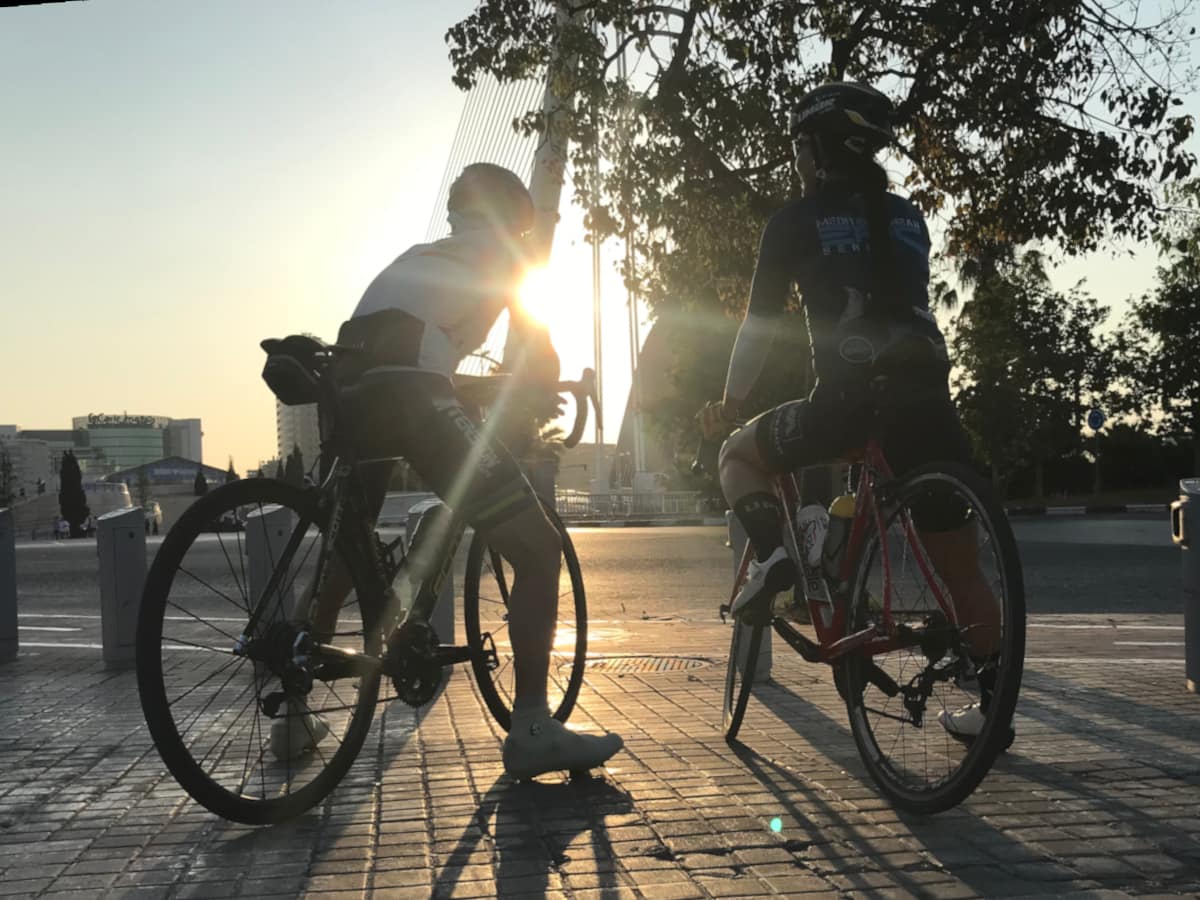
It’s critical to know where your next fill-up will be while riding in the summer
“Spain’s always hot,” some commentators have averred. Not so. This year, the end of June is experiencing prolonged temperatures, which usually do not occur until the end of July. La Agencia Estatal de Meteorología (AEMET), Spain’s weather agency, has reported an important fact. June, 2025, was the warmest month since modern records began in the Iberian peninsula. Normally as it gets warmer, the cycling group adds kilometers to the weekly rides. We also start riding earlier in the morning. But as the passing days get longer, they get hotter.
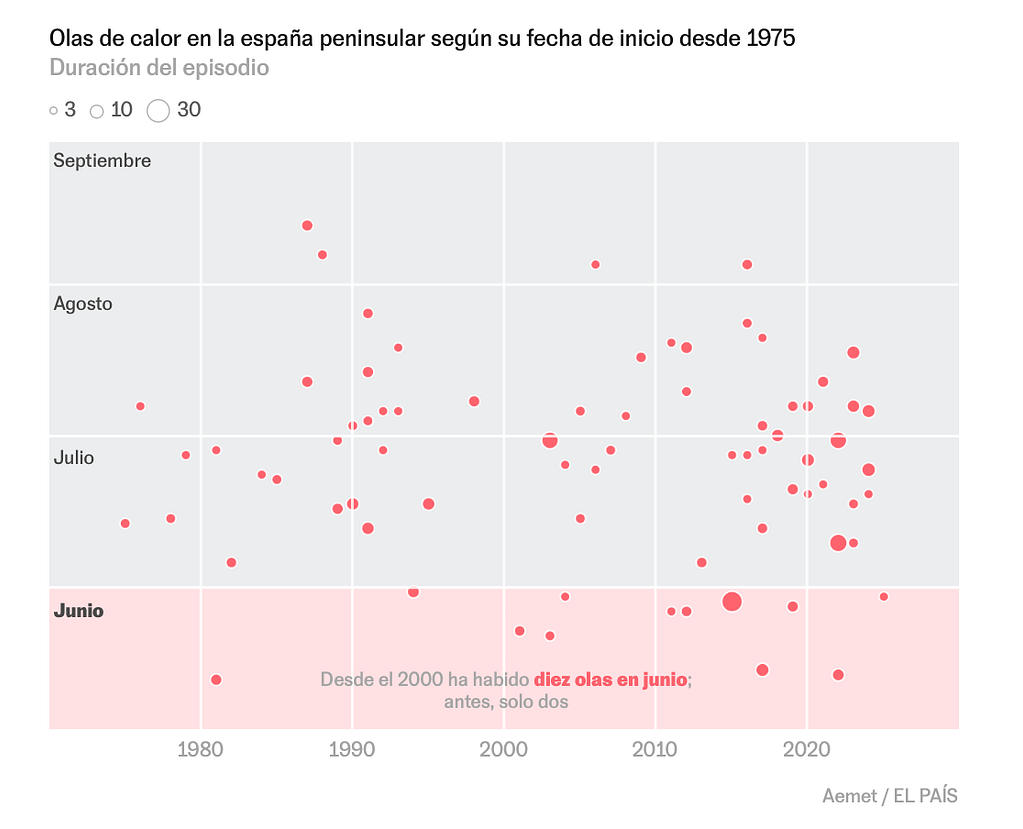
After a wet and cool spring, summer arrives with a vengeance. I have lived and ridden in Texas for years. The 27- to 32-degree Celsius (80-90 degrees in Fahrenheit) Valencian days are positively balmy. They are much cooler than the 40° C (104° F) days. These hotter days occur in the latter part of the south Texas summer. But that is changing. I am seeing temperatures of 33+ C (90s and above F) in my statistics after a ride.
But now, I’m not acclimated. Returning from Italy, years ago, to a “cool” summer in Austin, Texas, I was absolutely trashed by the humidity. This increases the heat stress. It diminishes the evaporative cooling— you know, sweating— that I had grown accustomed to in Rome.
My Texas riding was a death slog at times
I usually froze two large bottles with an electrolyte mix, which I carried on the bike. Then I would head out just after dawn. Of course, everything would melt in a couple of hours, but at least I had the initial cool drink. If I needed a refill, well, that’s what convenience stores are for.
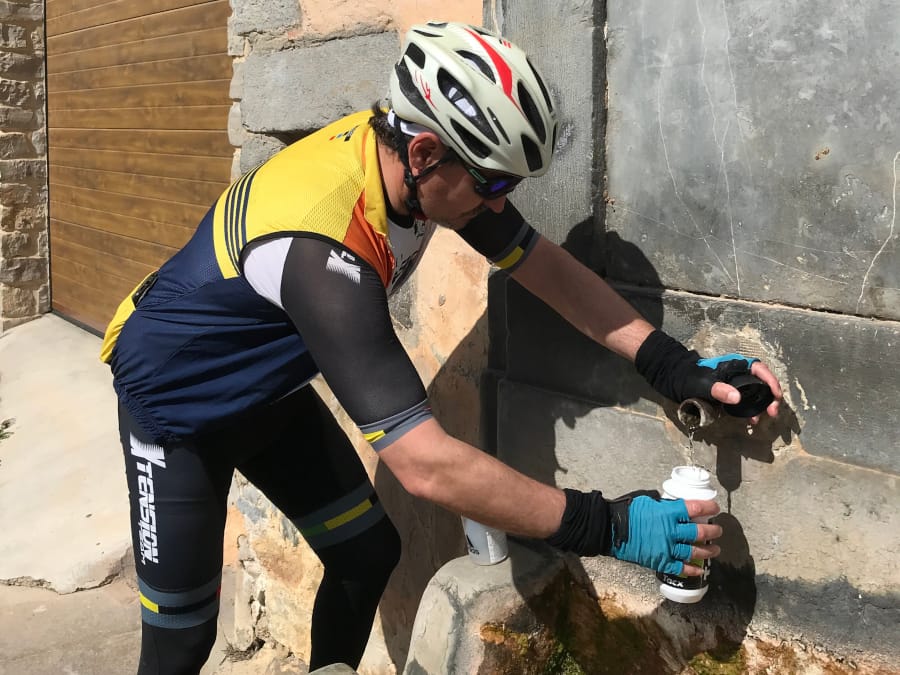
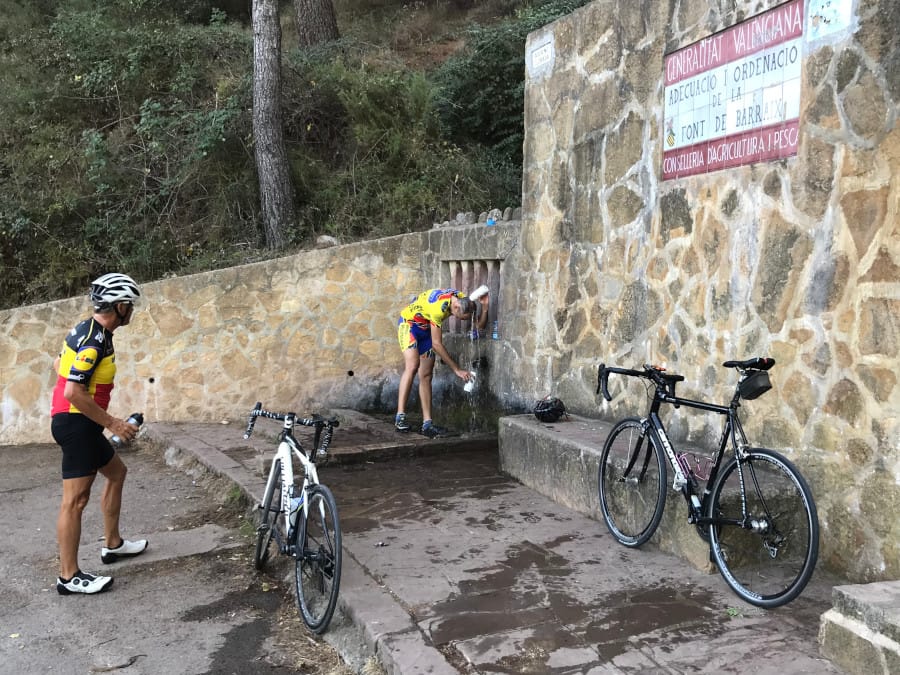
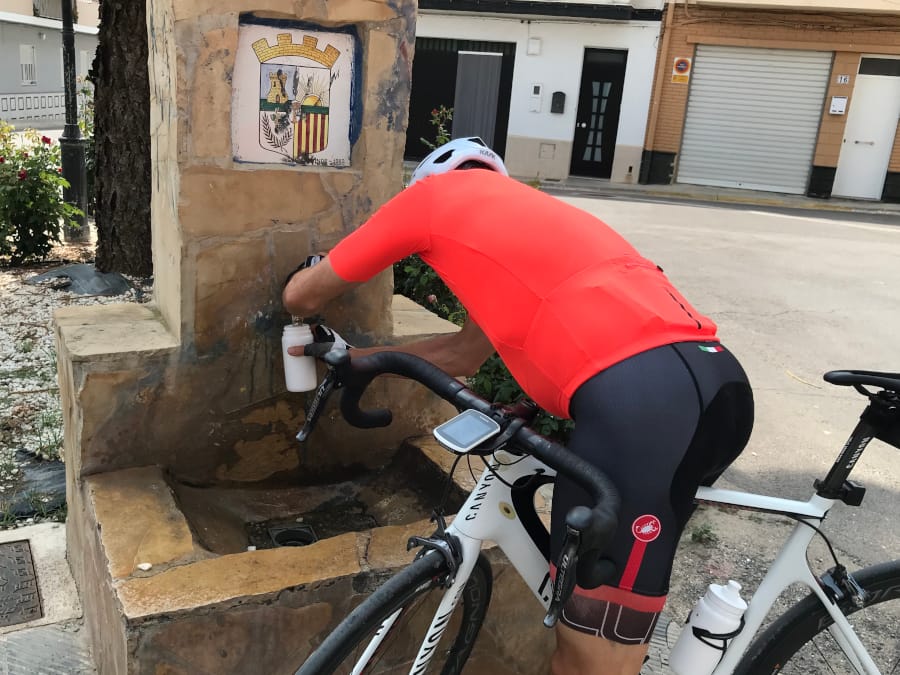
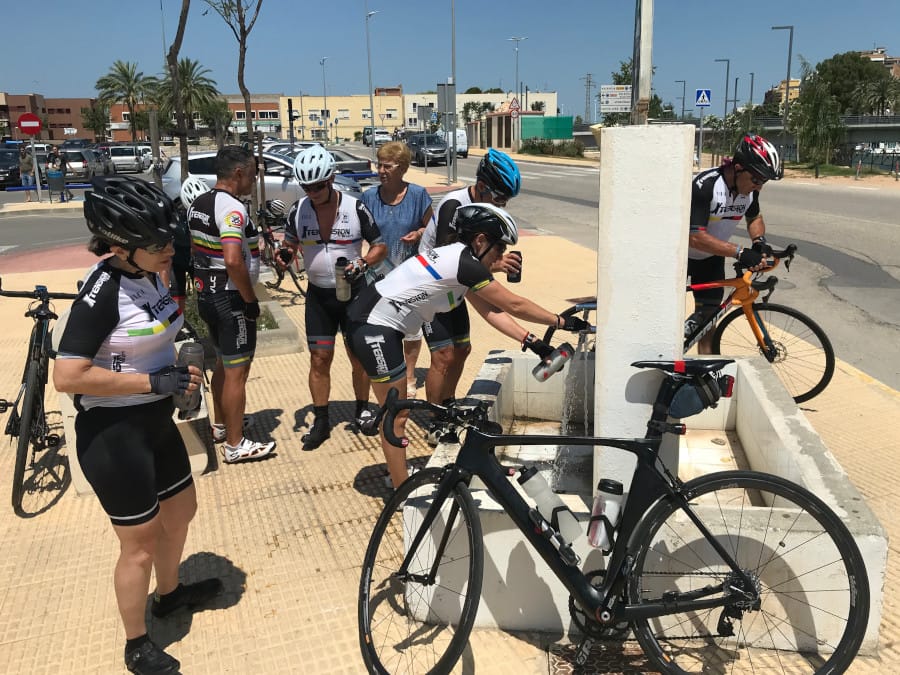
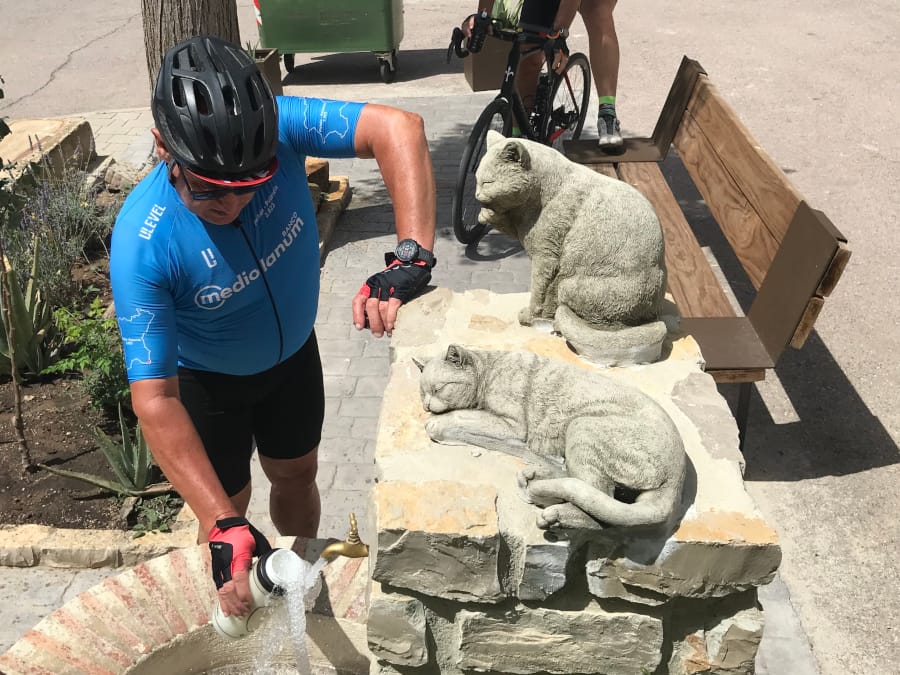
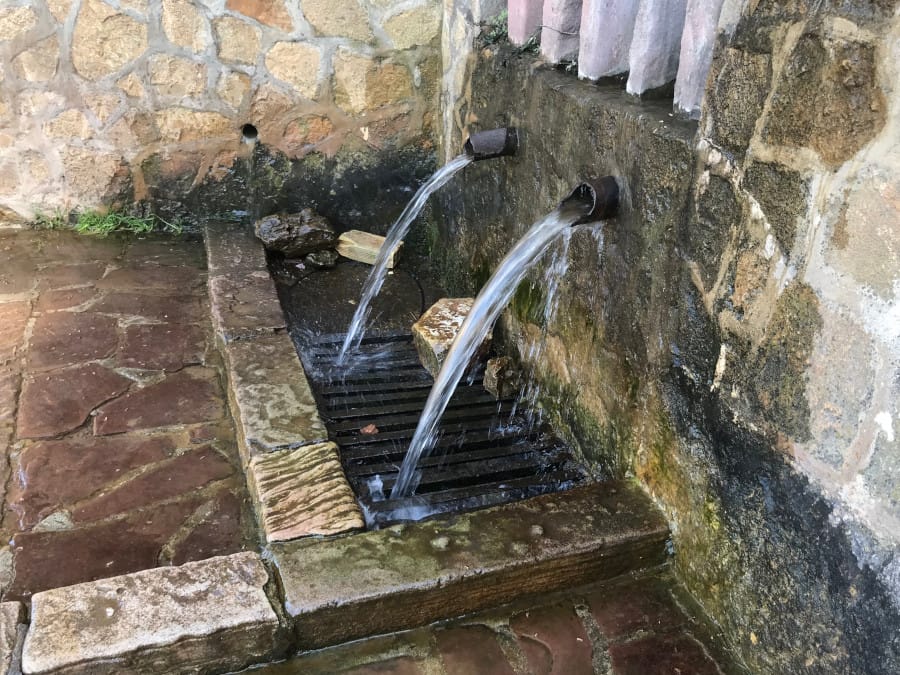
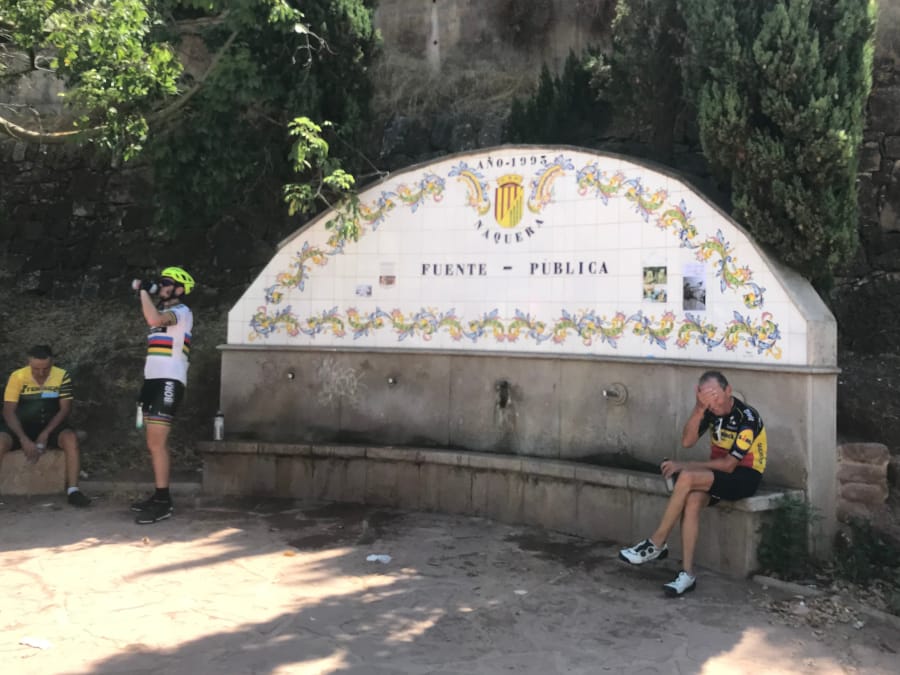
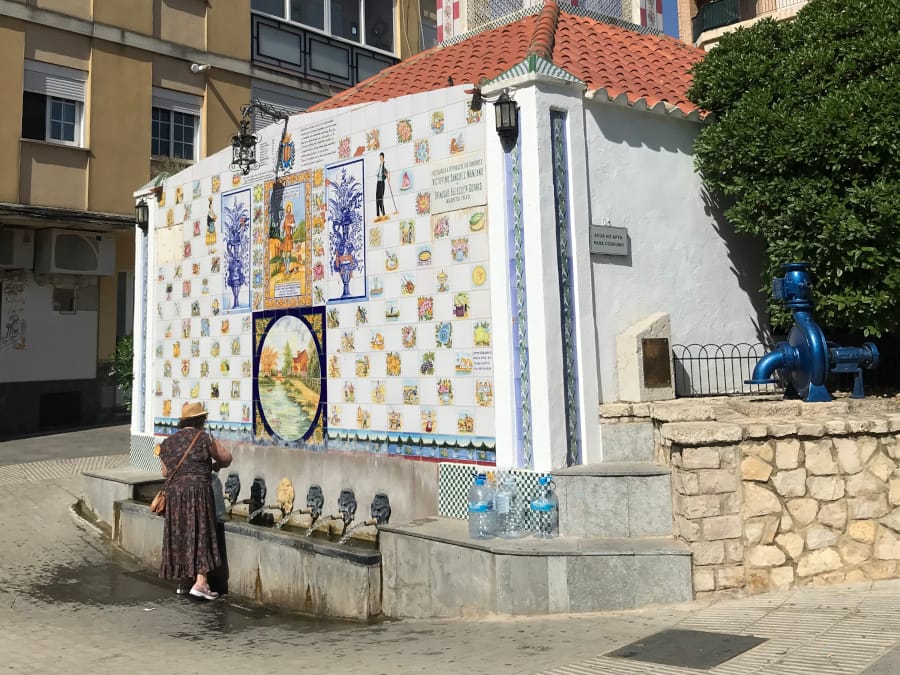
When I first started with my Spanish group at the beginning of summer, I noticed many had only one bottle. Surprisingly, it was not the larger size. Then I discovered that we would be stopping every hour or less. We would refill at the rural cañas and municipal fuentes. Literally, canes (pipes) and fountains, water would be dispersed liberally into bottles and onto our heads and bodies. Thus refreshed, we would set off until the next waterstop down the road.
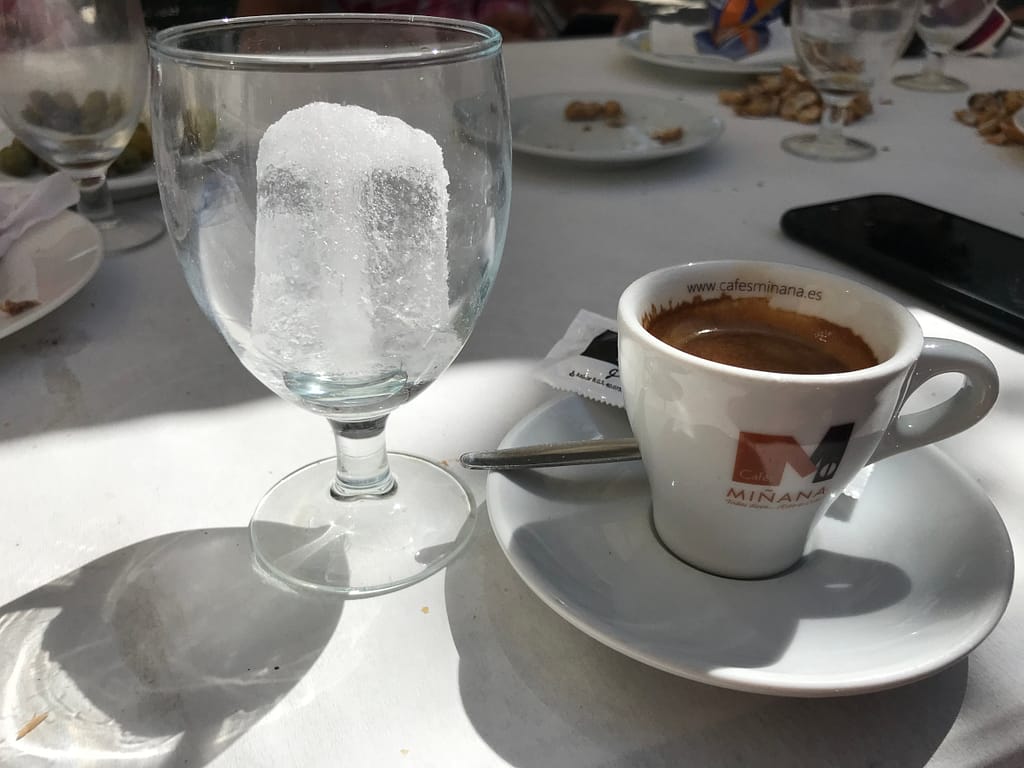
This was in stark contrast to my Texas teams. We would race non-stop to the turnaround. Then we would buy copious amounts of Gatorade at the Stop-N-Go. Then add ice. Then, we would repeat the high-intensity madness on the return leg. For my group rides in Spain, there’s the traditional almuerzo, or lunch, at mid-ride. A more civilized way to fuel for the bike. Finished off with a café del tiempo (iced coffee) we headed back.
Navigating the route using waterstops
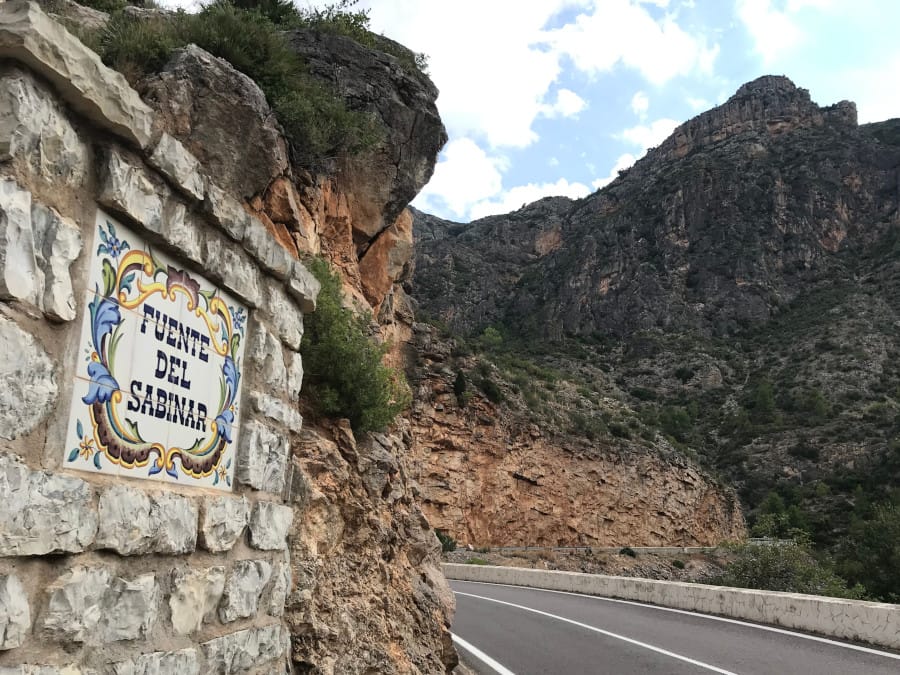
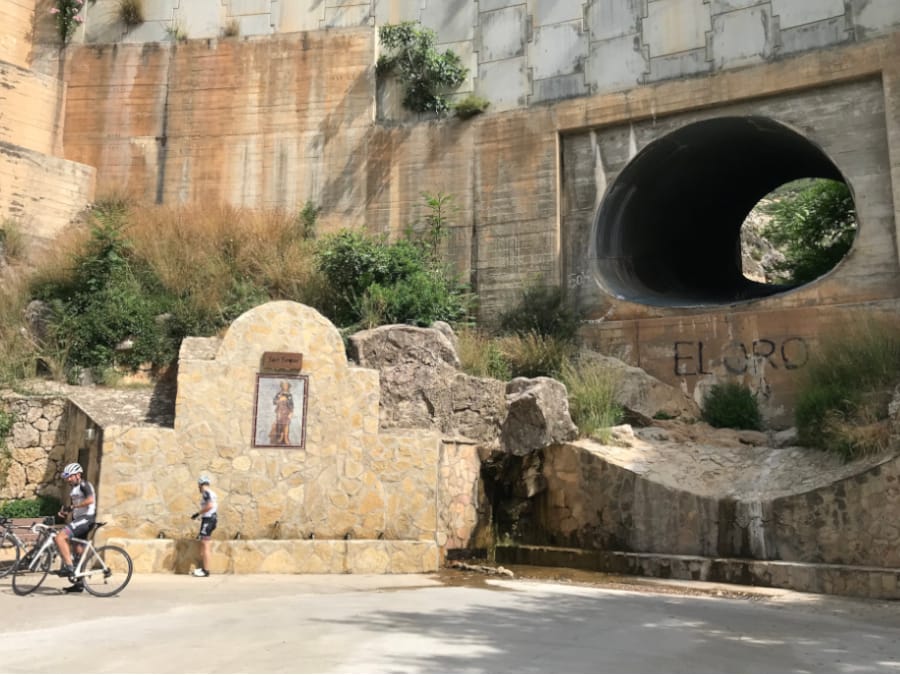
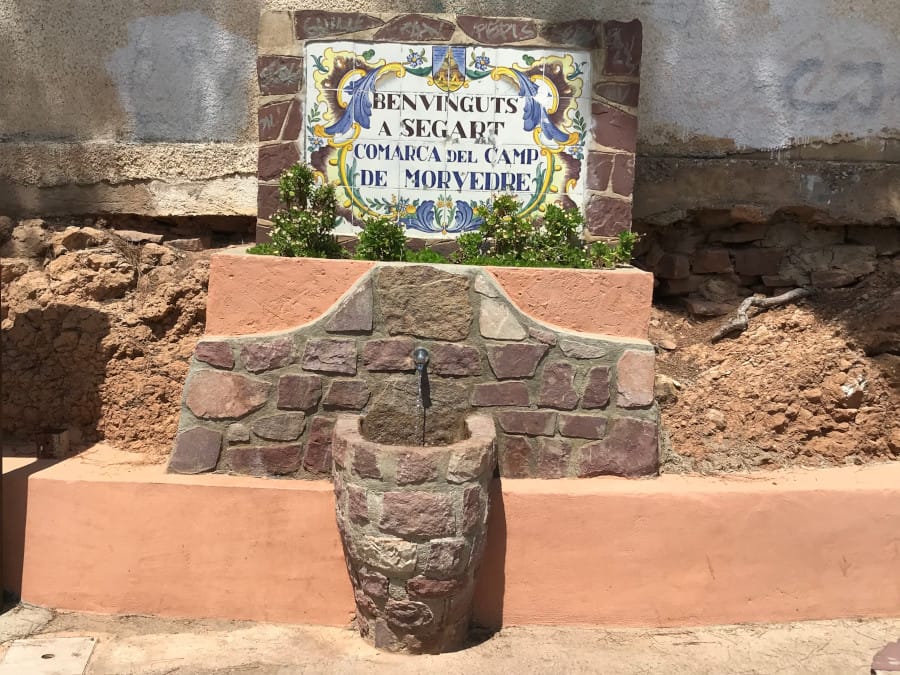
These Spanish oases can be found through the cities and small towns of the Valencian Community. Several remind me of Rome, with painted faucets placed throughout the city. In the smaller villages, it might be just a pipe with flowing water.
Alarmingly, a few of the cañas are labeled with the words “no potable” or non-potable. That doesn’t seem to deter my compadres. Dying of thirst by going without isn’t really an option at this point. So far, so good as far as intestinal side effects go. Maybe it is an abundance of caution by the civil authorities.
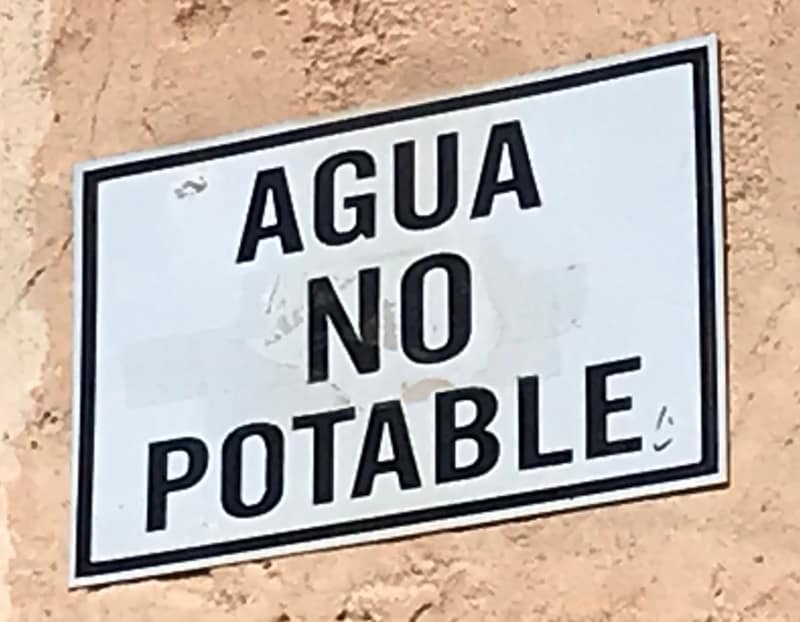
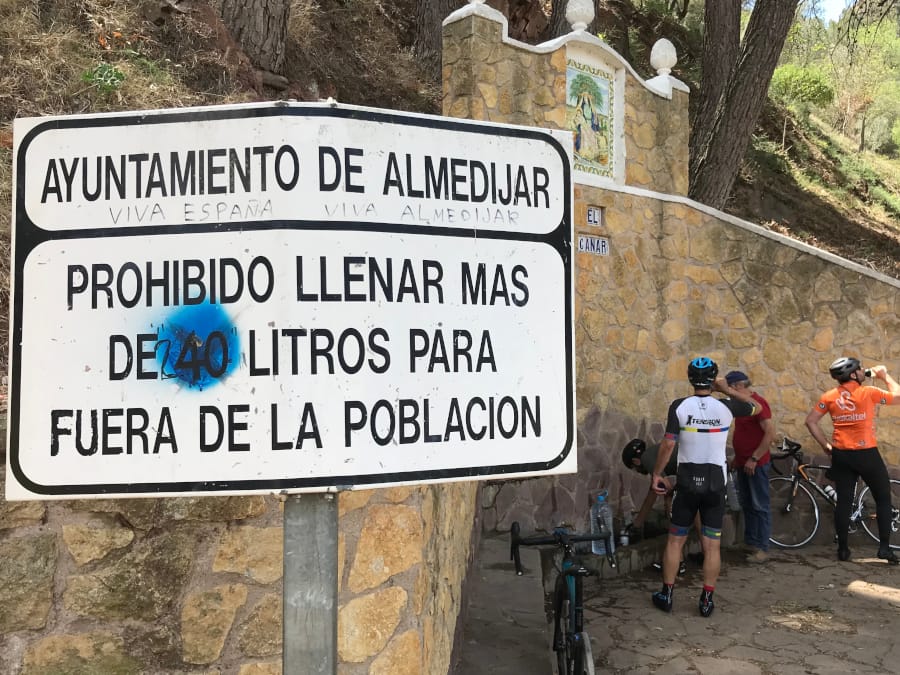
It also appears that some people are getting more than their fill. At times, I have seen signs admonishing non-locals to only tap a limited amount. So, the people topping off multiple jugs at these outlets are citizens of the community, I guess.
As we make our way down the road, we’ll be stopping at the next watering hole and regrouping. That takes the pressure off me and makes the ride more bearable. I know I won’t be dropped to ride home alone in the midday sun.
Locals know how to deal with the heat – leave town
As the summer wears on, these places of respite, the ones with free-flowing pipes, can run dry. The higher elevation you are at, the earlier the trickle disappears. As a side note, the riding summer season begins in September and finishes in July of the following year. In August, many Europeans exit the city for the cooler climes of the mountains or beaches.
As for me, I’ll dial it back a notch and work on short but specific drills on the bike indoors. August can get pretty quiet around here. Like the traditional afternoon break, many of the local shops and restaurants close for weeks. Except for a few hardy tourists, Valencia can seem deserted in August. Outside of the central area, it feels even more like a ghost town.
And with any luck I’ll plan my escape, too.
In the meantime, here’s a map of the various places I’ve stopped at to refill and refresh during our rides.

Calle de San Agustín, Alcublas, La Serranía, Valencia, Valencia.. CV-310, Valencian Community, Spain Calle Pranel, Valencian Community, Spain Carretera Fanzara – Castillo de Villamalefa, Valencian Community, Spain Carrer de Conchita Piquer, Casinos, el Camp de Túria, Valencia, .. Carretera Nazaret-Oliva, Cullera, Valencian Community, S Alameda el Oro, El Oro, Cortes de Pallás, El Valle de Cofrentes Calle La Fuente, Valencian Community, Spain Camí de Barraix, Valencian Community, Spain Water stop in Naquera, Valencia, Spain Coveta de Rabosa, Carrer de la Font, Segart, el Camp de … Calle Victoriano Sánchez y Trinidad Balaguer, Valencian Community



Leave a Reply