
What we want and what we do are different things
After living abroad and returning to the U.S., the idea of hopping in our car and going from place to place just wasn’t an attractive option anymore. Instead, it was how many things can I accomplish with a single trip? Need a gallon of milk? Wait until our grocery list fills up, then go. Add more tasks to that trip like gassing up the car. You can also pick something up at the hardware store. Consider doing other errands as well. No single-destination trips unless it was absolutely necessary.
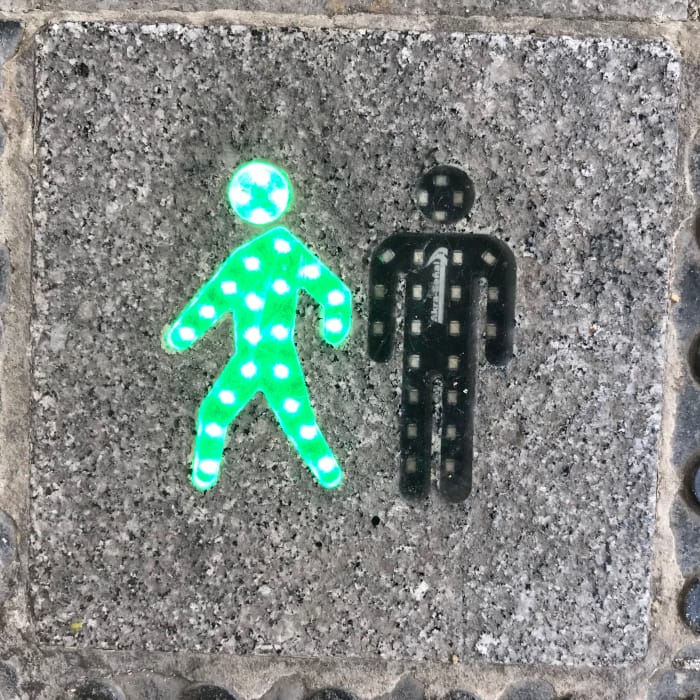
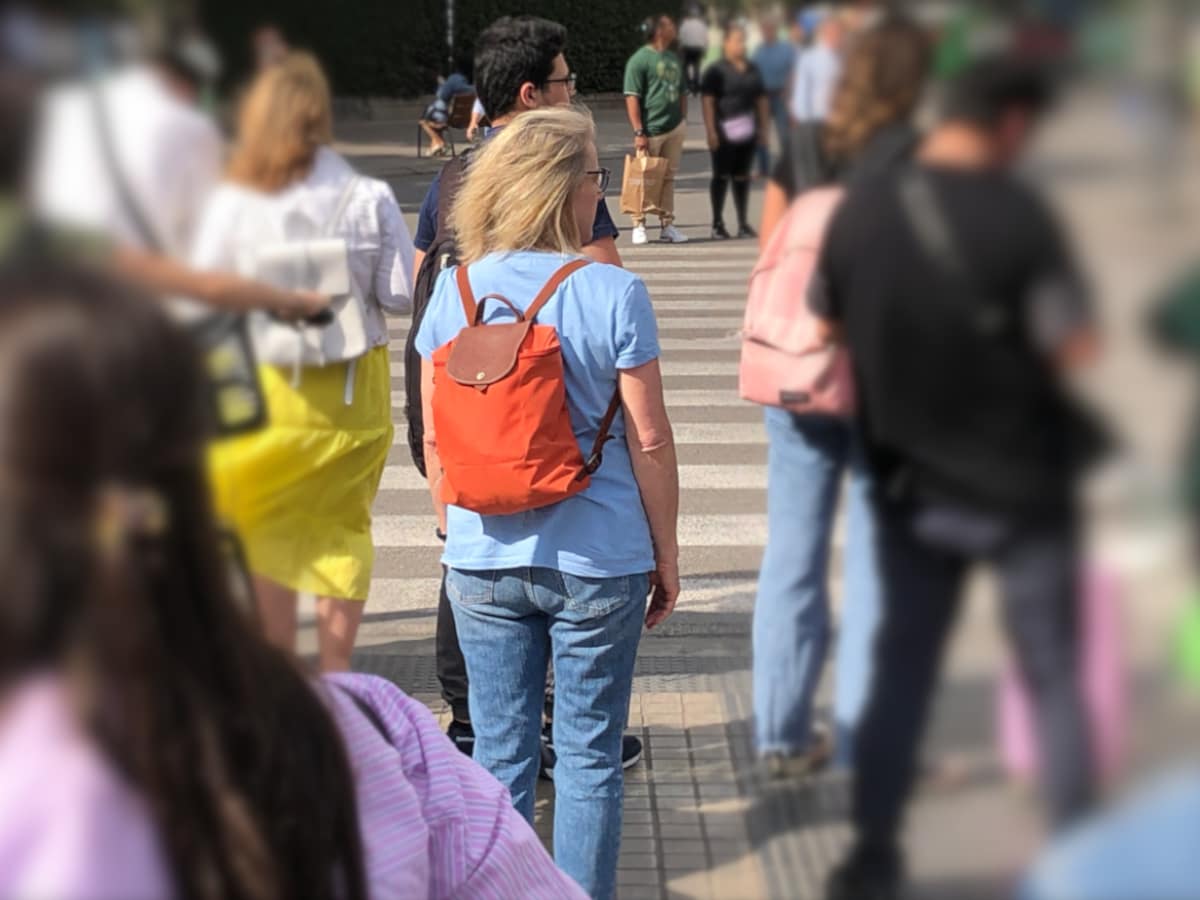
Many visitors to Europe and other lands marvel about the walkability of the cities. However, after going back home to their countries they quickly return to their car-centric life. American cities are built around the motor vehicle – pedestrians and other users are at best an afterthought.
One thing that was difficult to replicate was walking to do those tasks. In the United States, single family homes, in subdivisions without any nearby commercial businesses, make that practically impossible. The lack of sidewalks in many communities means sharing the street with cars and large SUVs. Our mid-century development was built around the automobile.
We looked with fresh eyes on how to limit our car’s use. Note the single “car.” For most of our time in the U.S. we only had one vehicle between the two of us. There’s the old saying about a boat being a hole in the water where you pour money. Well, a car is a depreciating asset. In other words, every day it’s worth less and less.
In selecting our home, I checked out the availability of nearby bus routes to commute to and from work. That was my back-up plan. Primarily, I would go to work by bicycle. The upside? I traveled from the house door to the work door in the same amount of time as the bus. There was no waiting involved. On inclement days, it was the bus. A big shout out to mass transit and its underappreciated infrastructure. It’s inconvenient at times, but it gets you there.
Spain #3 for walking
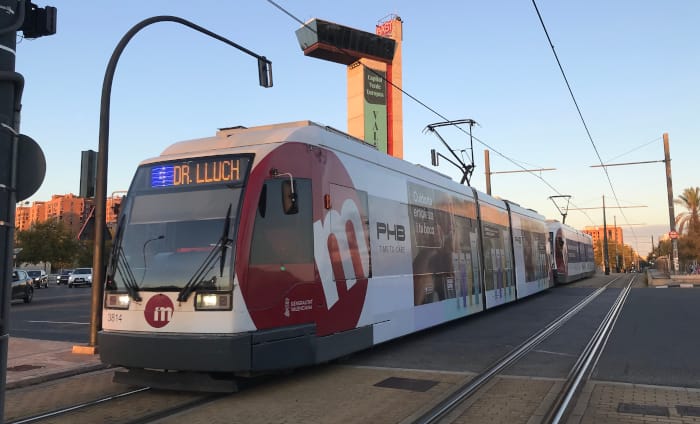
Back in Europe and Spain, we rapidly returned to our car(e)-free existence. Compact cities mean practically everything is nearby. A major supermarket is across the street. Another one is a block over. Need to get to the airport? The Metro will take you there. An early-morning flight? If the subway is not operating at that hour, a relatively inexpensive cab ride will take us there. I’ve even flagged down taxis at four in the morning as there’s always something going on in the city.
I found this 2025 recap on Garmin, the sport and activity measuring company.
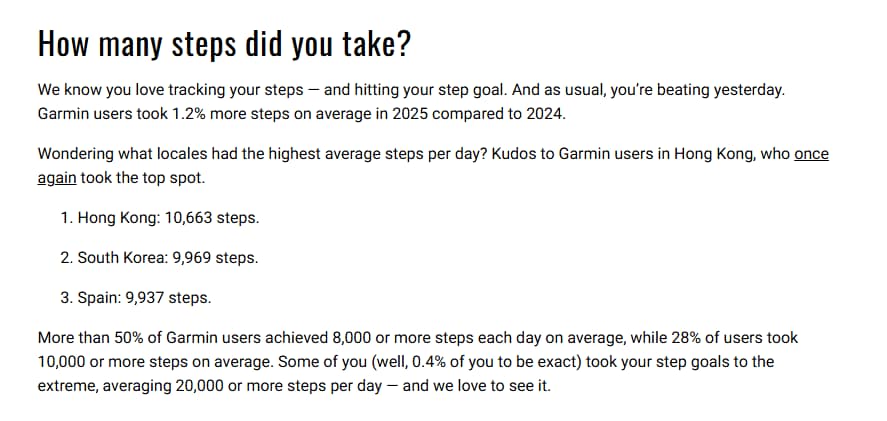
Not having instant access to a personal automobile can be inconvenient. But trying to park one on city streets in Valencia takes far more time. The Spanish and local governments are really trying to reduce inner-city congestion. They are limiting parking places with Limited-Traffic Zones. They are also making fuel costs more expensive. It’s what economists call “pricing in the externalities”. These include pollution and parking lots. The calculations also assess the damage vehicles do to people in general.
An inconvenient life is healthful
The return to the U.S. from Italy years ago came with a reverse cultural shock. The amount of choices on U.S. supermarket shelves boggled my mind. I had become accustomed to a smaller array of choices. Walking between the green grocer’s, the butcher’s, and others’ shops was a way of life. It took a while to get used to the idea of everything in one place.
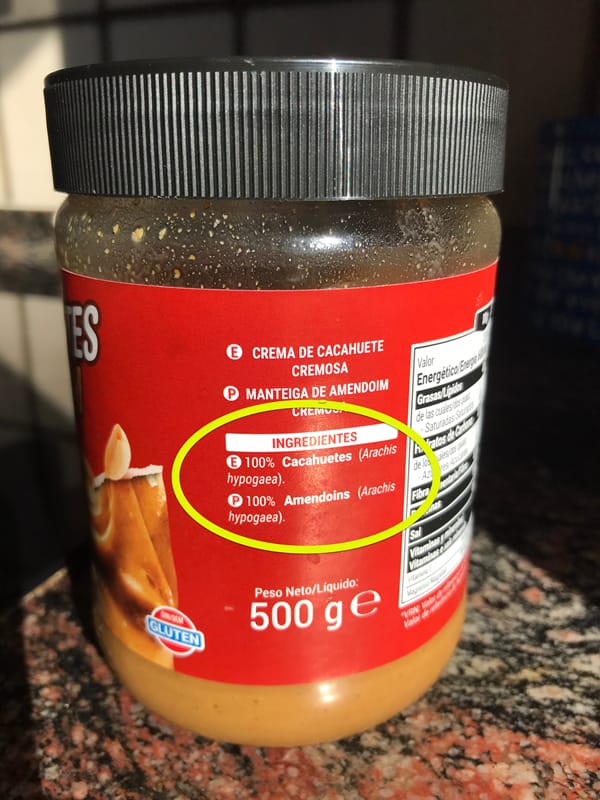
Back in Europe, we go from store to store to get this or that item. This inconvenience can create a healthy lifestyle. To take one example: Peanut Butter. Here, my local supermercado carries only one type on its shelf. (If I want the crunchy kind, I have to walk to another store.) Its sole ingredient is “cacahuetes,” that is, peanuts. No hydrogenated oils, no other additives, it’s just less ingredients. Yes, the contents will separate, but stirring it together before spreading fixes that easily. Then there are the health benefits, which outweigh the inconvenience.
Again, walking is our primary mode of transportation. Whether it is to the grocery store, pharmacy, hardware store, or even the train station, this is done on foot. When I lived in Rome, I used to carry the roll-around grocery cart. I carried its contents up four flights to our walk-up apartment. Here, we have an elevator, but I make a point of using the stairs when able.
Admittedly, I found that portaging a bike up and down eight stories on a narrow staircase is not that easy. I will defer to the elevator on that one, but I’ve carried the bike up and down before. When the elevator was out of service for a couple of weeks, it became a necessity. Now going up and down the stairs is part of my workout routine before and after the (nearby) gym session.
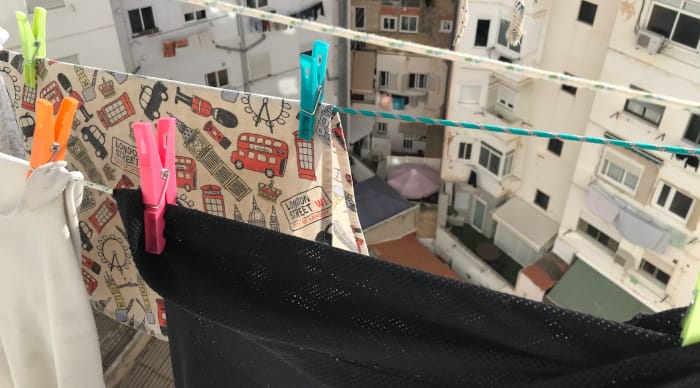
We don’t have a clothes dryer, although there’s a nearby laundromat we can use in a pinch. We hang our freshly washed garments and towels outside on lines. This is just like our neighbors here and in Rome. But we make sure to look at the weather forecast to avoid a rain shower.
We don’t have a clothes dryer, although there’s a nearby laundromat we can use in a pinch. We hang our freshly washed garments and towels outside on lines. This is just like our neighbors here and in Rome. But we make sure to look at the weather forecast to avoid a rain shower.
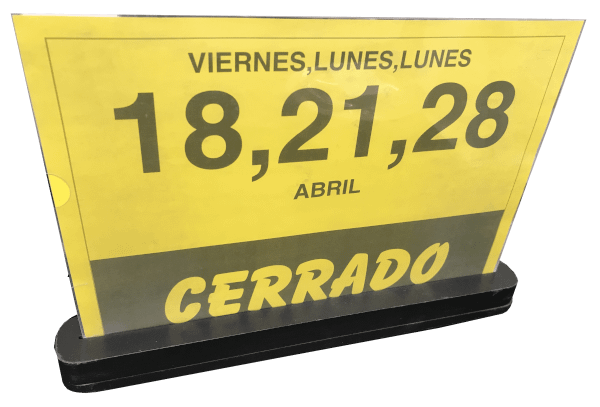
Here is the main takeaway about living your best (inconvenient) life. It is planning ahead. On Sundays, the stores are closed. There is a Charter food store that has limited hours on Sunday. It is smaller and has an even more-limited selection. Also be aware of holidays, both regional and national. Then practically everything is closed. And there are a lot of holidays! But that’s the beauty about living in Spain. It’s scaled to the personal level and best experienced on foot and not from behind the wheel of an automobile.



Leave a Reply