
Visa renewal with several hurdles
In 2021 our family arrived in Spain on a Non-Lucrative Visa or NLV. That’s the one where you are not supposed to work and it predates the Digital Nomad Visa or DNV. This period was also the tailend of the Covid pandemic. After having received our vaccines, we waded through the NLV applications, and, when approved, we left the USA.
Originally, we planned maybe a couple of years in Spain before going elsewhere in the E.U. But life happens. Passing the three-year mark, our thinking turned to “Well, we’ve been here for over three years, why not stay another two?” The reasoning being at that point we could apply for the Tarjeta residencia de larga duración or the long-duration visa. The benefit is that instead of renewing the NLV every two to four years, we’d be on a five-year cycle. And we could come and go more easily to Spain and within the European Union’s Schengen Area.
What we are actually trying to obtain
I’m not writing about getting citizenship. That’s another level of complexity and five years more.
We closely monitored our current visas’ expiration dates. Also, one can’t exceed a certain amount of time outside of Spain during the preceding five years. Two months out, we submitted our request for the long-duration visa. Supposedly, this is the easiest of all renewals. But nothing ever is.

With the guidance of a good friend – whose help proved indispensable – we had planned for two hours to complete the task. However, it took from 10:30 a.m. to 4:30 p.m. – six hours in total – to finish. During that period we made a quick dash to a government office to get our Digital Certificates, which were critical to submitting our application. I had been putting this part off since it seemed very complicated. And every Spanish office seems to have a line and an overwhelmed clerk.
I was totally wrong. We walked in, our friend explained to the greeter in the lobby what we wanted. Then we were met by Vicente, who cheerfully accepted our IDs and created the Digital Certificates. Then we received text messages confirming the info. We headed back to the apartment to start the next step. Much easier than we expected.
One step forward, two steps back
Having used digital certificates before while working, I thought I knew how to set them up. But adding these to our browsers proved particularly troublesome. Even with our friend’s help, multiple attempts installing proved futile on my wife’s Mac. Before you ask, we tried both Chrome and Safari apps without success. And the Keychain Access app.
While my wife and our friend struggled with getting access to the forms needed on her laptop, I loaded my certificate on my PC, followed the instructions from the Spanish website here and successfully got my Chrome browser to recognize it.
Finally, our friend noted that my wife’s Mac wasn’t going to work for us. We then decided to start with my submission on my very old Dell desktop computer. It works, but the machine can be cranky at times. After utilizing the cert in Chrome, we got the governmental site to authenticate my profile and began the process.
Old tech, new buggy websites
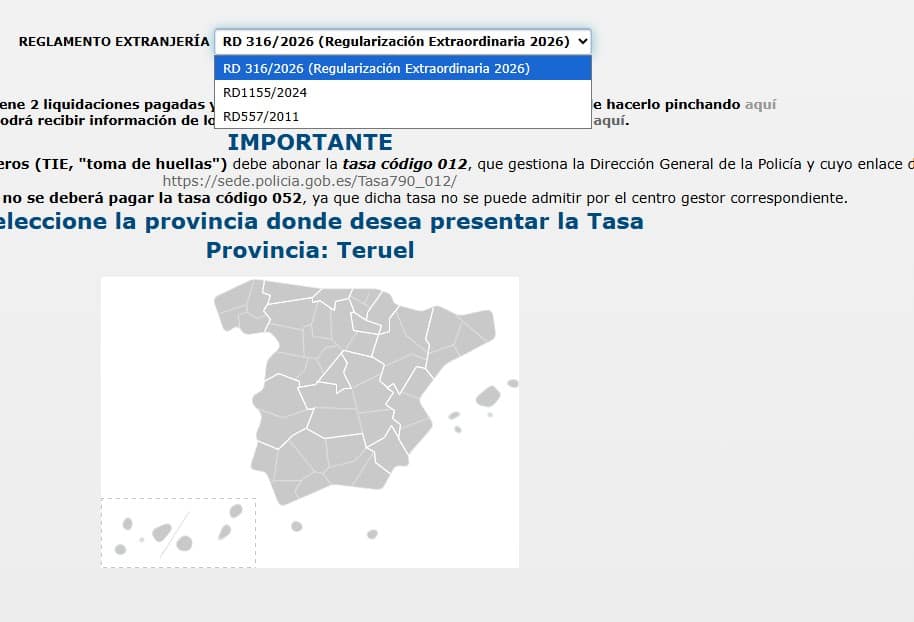
What had seemed so auspicious as a start, suddenly bogged down. The official Spanish website was quirky. We’d enter the data, find a roadblock, and then start again. One initial issue we had to overcome was which form to use. The one from 2026 or 2024 or 2011?
We picked 2026, thinking it was the most current. Nope. That year’s version is for the regularization of some 500,000 undocumented immigrants. The area we needed to tick was grayed out. Backtracking, we started with 2024, which got us the correct box to check off.
Then we found we couldn’t add the municipality to the EX-11 form. We filled in our address, codigo postal (postal code like a ZIP code in the USA), and then we’d get an error. A number of tries later, we discovered that it’s best to start with selecting the communidad and city first, then go to the dropdown menu and select the municipality. So in our case it went from Valencia > Valencia > Valencia. Don’t ask me why it’s needed three times. It just is. Probably it works best to use the tab key to move from field to field. Do not click on what you think is the next option.
So on to the payment. We filled it out, put in the bank details, and hit submit. Then we looked for the receipt; there was no record of a withdrawal. Failing to pay the moderate sum, in this case 21.87 euros, flummoxed us. Eventually, he figured out that we had selected the wrong payment option. It only took three times of filing, failing, and refilling the info to fix that.
Even with the guidance of an experienced friend, who has done this process multiple times, there still was a learning curve.
Finally, a light at the end of the tunnel – or is that a train?
Eventually, we had found our way to the part where we needed to upload our documents. This included our Foreigner Identity Cards (TIEs) – copied front and back, Empadronamiento (a type of census to prove residency), proof of payment, and every scanned page of our passports. That was also a problem to overcome. Not wanting to use a low–resolution document, I selected the 600-pixel scan. Big mistake. The file ended up being almost 17 MB. And the site would only accept a 6-MB file size as the maximum upload.
Some more scrambling ensued by our friend ensued. Then he figured out a way to compress the file without sharing our personal info with a third party, online provider. I read later that I could have used a 300-pixel setting instead. Reportedly, the MERCURIO 2.0 site uses Artificial Intelligence to vet the uploads, so if the quality is too low, it’ll flag the document.
Following the successful uploading of my application, we rapidly went through and submitted my wife’s forms. Using what we learned from the previous efforts, it went far faster. The certificate was successfully loaded and accessed. I stood in as her representative to pay the fee. Finally, all documents were correctly formatted and uploaded. Within 24 hours we received confirmation from the immigration authorities that the information had been accepted for review.
Now all we need to do is check back regularly. Hopefully, this part won’t take the full 90 days, which the law says is the most it should take to turn this around.
And now the real waiting begins
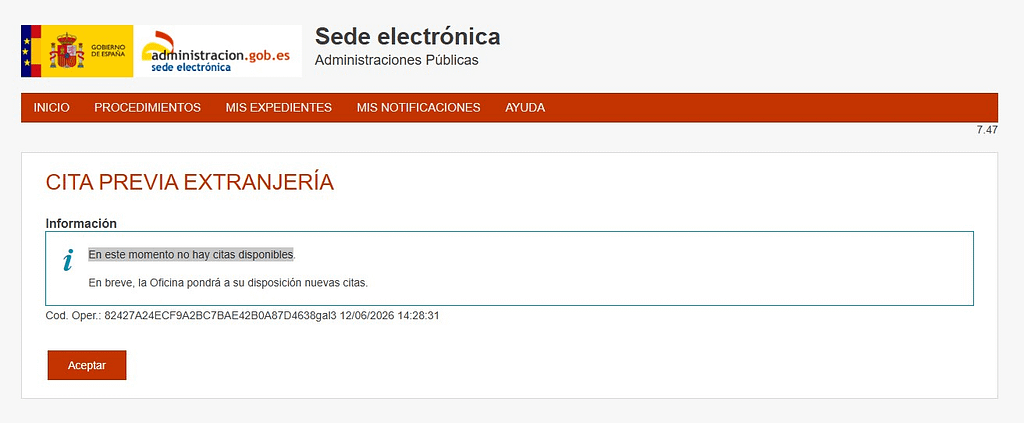
Even if that application is approved, we still have to run the gauntlet of getting an appointment at the Extranjería Police Station. These have proven very difficult to obtain as it’s reported that people use computers to “scrape” the appointment site to book all available openings.
Then these are resold to desperate people like us. And this isn’t something we can forgo since the authorities need our fingerprints, photos, and payment for the renewal. Then it’s another 45 or so days to get our physical card.
As I’ve written previously, “If it was easy, everyone would do it.” But it’s worth it to keep our options open. Five years on, the world has changed a lot.

Deja un comentario