

Also known as the permanent visa, this wasn’t as simple as expected
“It’ll be so much easier,” they told us. This is our fifth year in Spain on the Non-Lucrative Visa (NLV). Now, at the end of that period, we are eligible to change it to the Long-Term Visa (PDF). Supposedly there are less hurdles to overcome.
Any time someone tells you “It’s easy,” run. Nothing is ever that straightforward.
During the initial five-year period, getting and renewing the NLV required several things: Proof of income (currently four times the yearly IPREM), paying for health insurance, and a prohibition from working. Those that wish to work freelance, for jobs outside of Spain, there’s the Digital Nomad Visa.
So, when we set out to renew our visas, we expected a fairly painless experience. Afterall, being five-year residents of Spain, we got this.
As noted elsewhere, the Dunning-Kruger effect is a real thing. To begin with, even after all our time here, we didn’t have a digital certificate. That’s critical for AutoFirma, a tool used by the Spanish government to authenticate identities online. We had the Cl@ve app, but the digital certificate is another level of security and allows greater access to governmental services.
Nothing is as effortless as promised with bureaucracy
So, two months out from our current visas’ expiration dates, we sat down to apply for the Long-Duration Visa. And, yes, we needed the digital certificate. And of all the tasks, this was the easiest to obtain. If you are.older than 18 years old, have a DNI, NIE or NIF, you are eligible. After receiving the link, we downloaded the certificate. But there’s always a hiccup. We tried installing it on my wife’s Mac computer (paywall site). No go. Eventually, we used my old clunker PC and got it done.
Finally, the submission of the forms and proof of payment. Then came the waiting. The approval process can take up to 90 days according to Spanish law. Surprise! In just slightly under 30 days, we were approved. Now comes the hard part. Getting a cita previa at the national police station means presenting another proof of payment, new photos, and fingerprints to confirm your identity.
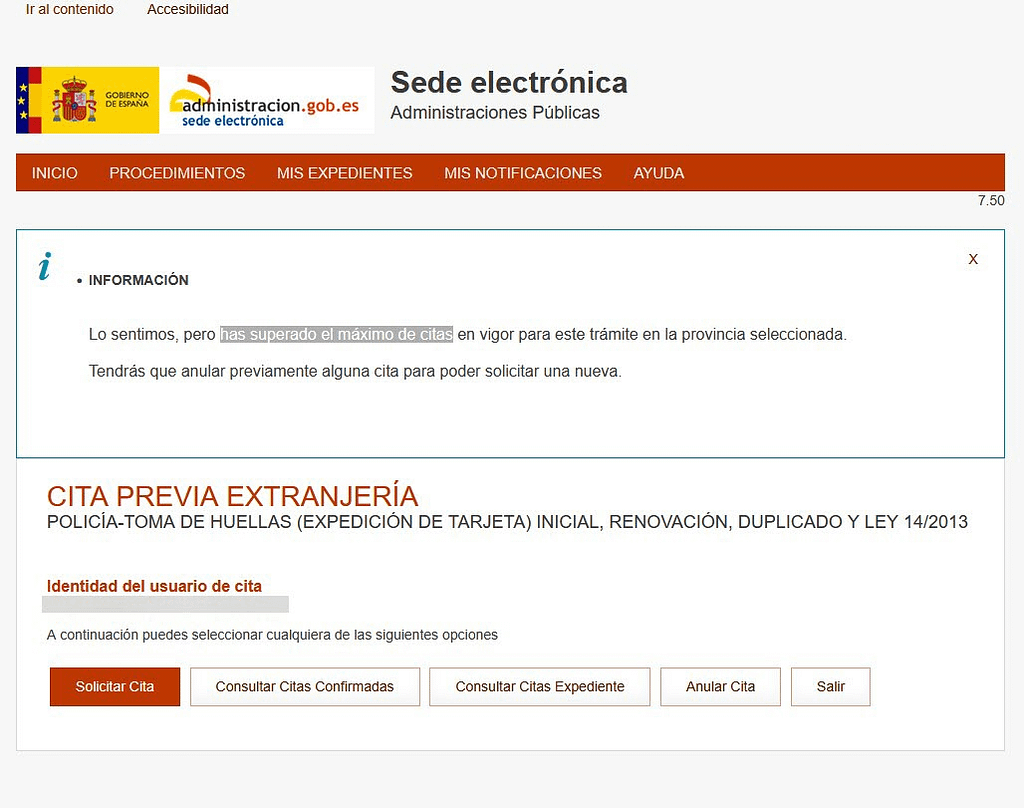
This is critical. Without that appointment, the visa renewal does not move forward. And everyone else knows that. Visiting the appointment website numerous times always results in the message “Nothing available.”
It is a frustrating experience. One is constantly adding data, refreshing, hoping. Then comes the truly maddening part. Looking at social media groups and general web searches tell you the best time is in the mornings or various times in the afternoon or just random attempts. Really helpful info.
For me, the random attempt worked when an appointment opened up unexpectedly six weeks out. Good enough. I seized on it and was successful. You do not quibble about luck being inconvenient in that circumstance.
Sign in, click, repeat
Originally, I had both digital certificates loaded on my cranky computer. However, I must have angered the security gods, and my wife’s certificate was rejected. Maybe too many attempts from the same computer with different certs – Who knows? Eventually, I sorted it out so I could continue working on my computer, while checking for open slots in another browser window.
In the meanwhile, it’s off to my wife’s computer, which is as old as mine, but it is a Mac. After several failed attempts, I finally got the AutoFirma to accept her certificate. Yay! But then the real fun starts. On an early Friday morning, we descended into Dantes’ Nine Circles of Hell. Constantly we were met with “Nothing Available” messages.
One thing I discovered on the Internet was not to refresh the page too many times. This was to foil bots, which are a scourge on the system. In the past, unscrupulous operators would use computer programs to vacuum up all available timeslots. These, then, would later be resold to desperate people like us. In other words, the web-scrapers would create their own demand by cornering the market. You know, capitalism at work.
A welcome change to the method
This time, it appeared the Spanish government had addressed the problem – hopefully. By insisting on the use of the digital certificate or the Cl@ve app, it ensured a real user got one appointment at a time. That’s the way it’s supposed to work.
Read the story in El Diario: La Delegación del Gobierno de Cantabria modifica el sistema de citas de Extranjería que se venden hasta por 200 euros
The issue then became limited availability. A whole lot of people need those appointments to move the procedure forward. And we’re all at our electronic devices typing furiously and refreshing the screen in hopes of an opening. Some cities – Madrid and Barcelona – are mentioned as having a high volume of requests but limited resources in handling them.
Here in Valencia, I suspect we’re better off in that regard – but probably not by much.
The odyssey continues
Back to the saga. With coffee cups in hand, we selected our communidad, the police station we were required to go to, and the service needed “Huellas…” or finger printing for renewal. Again and again, we saw the “No Appointments…” message. (En este momento, no hay citas disponibles…)
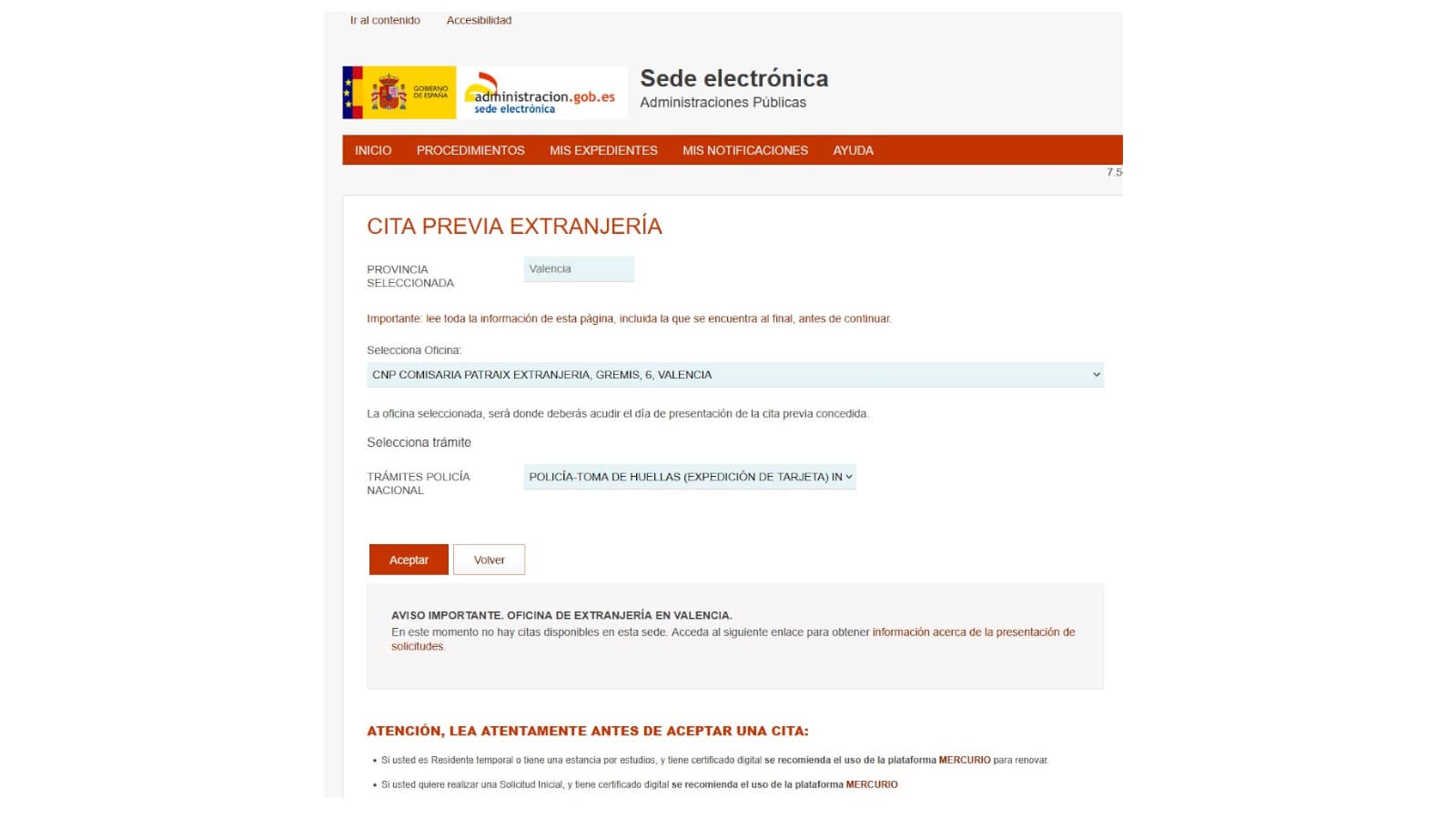
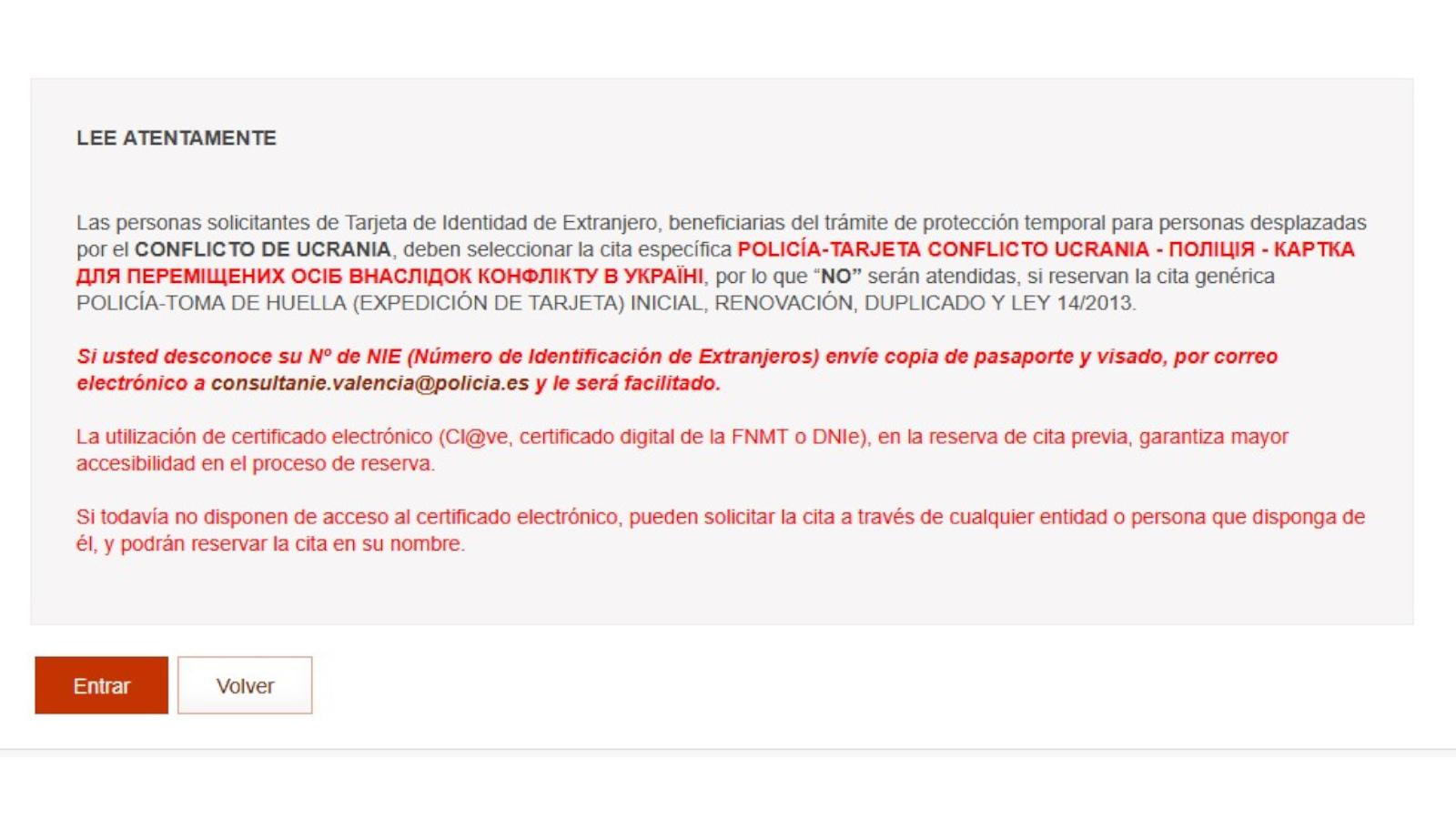
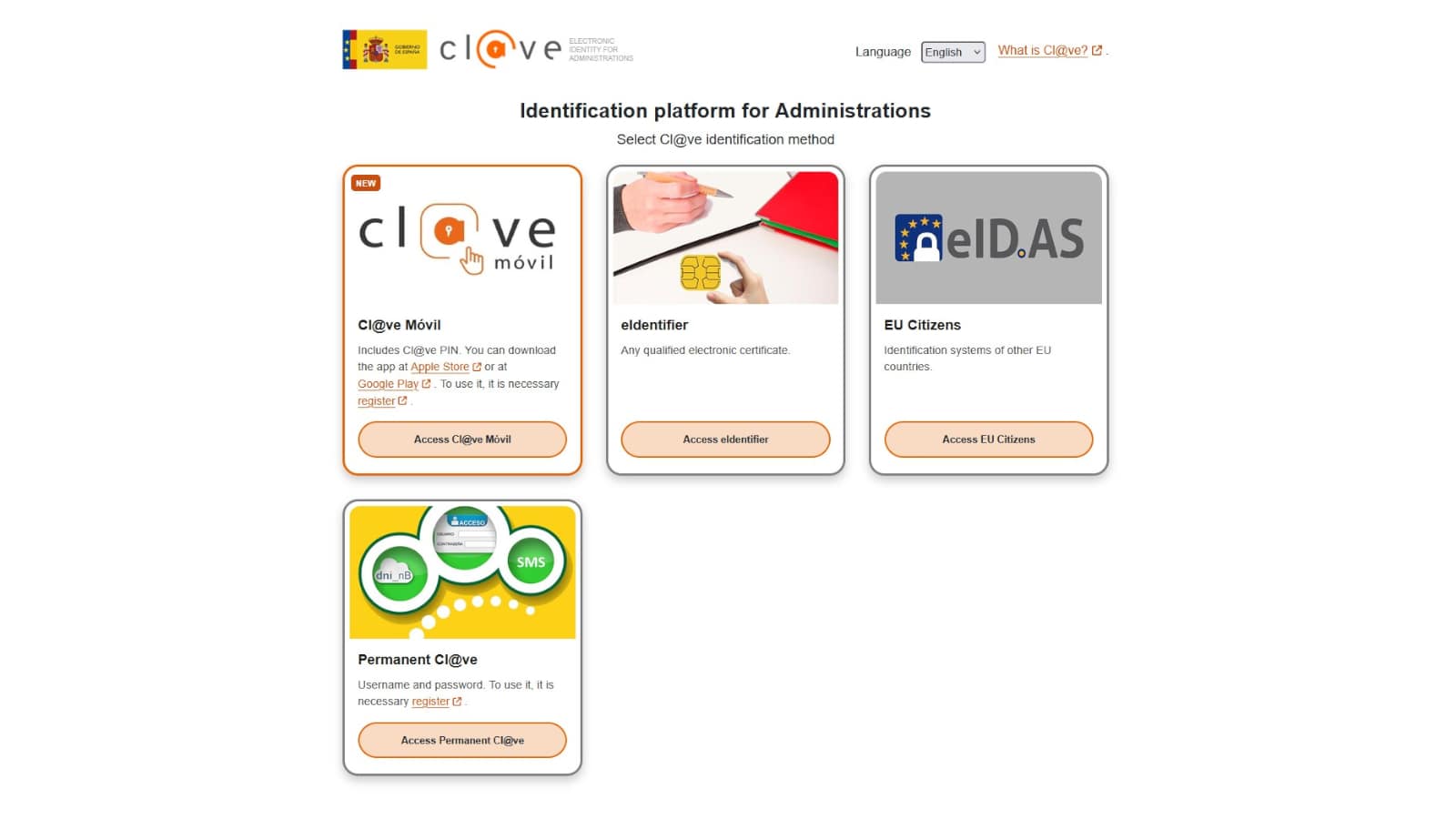
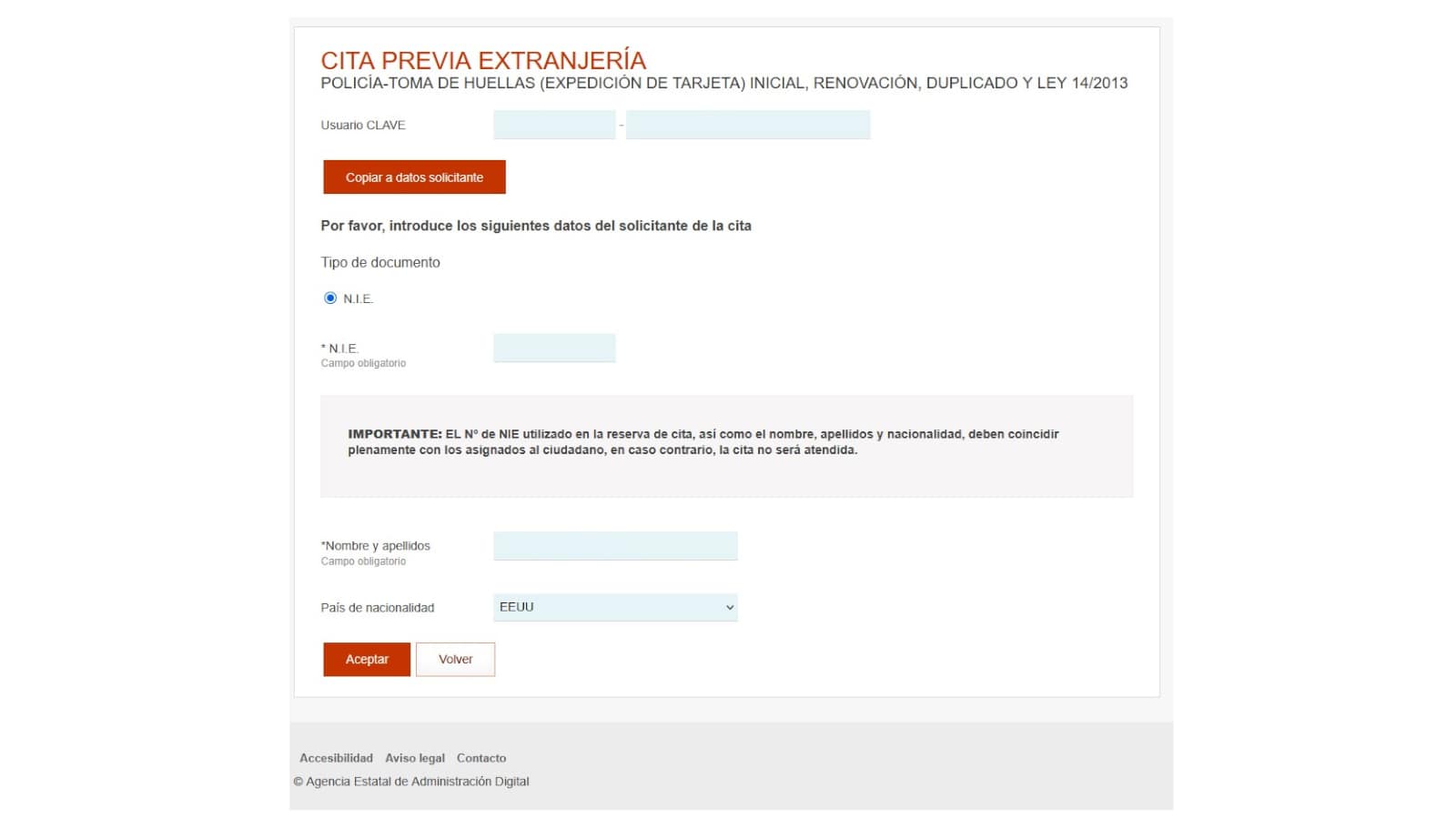
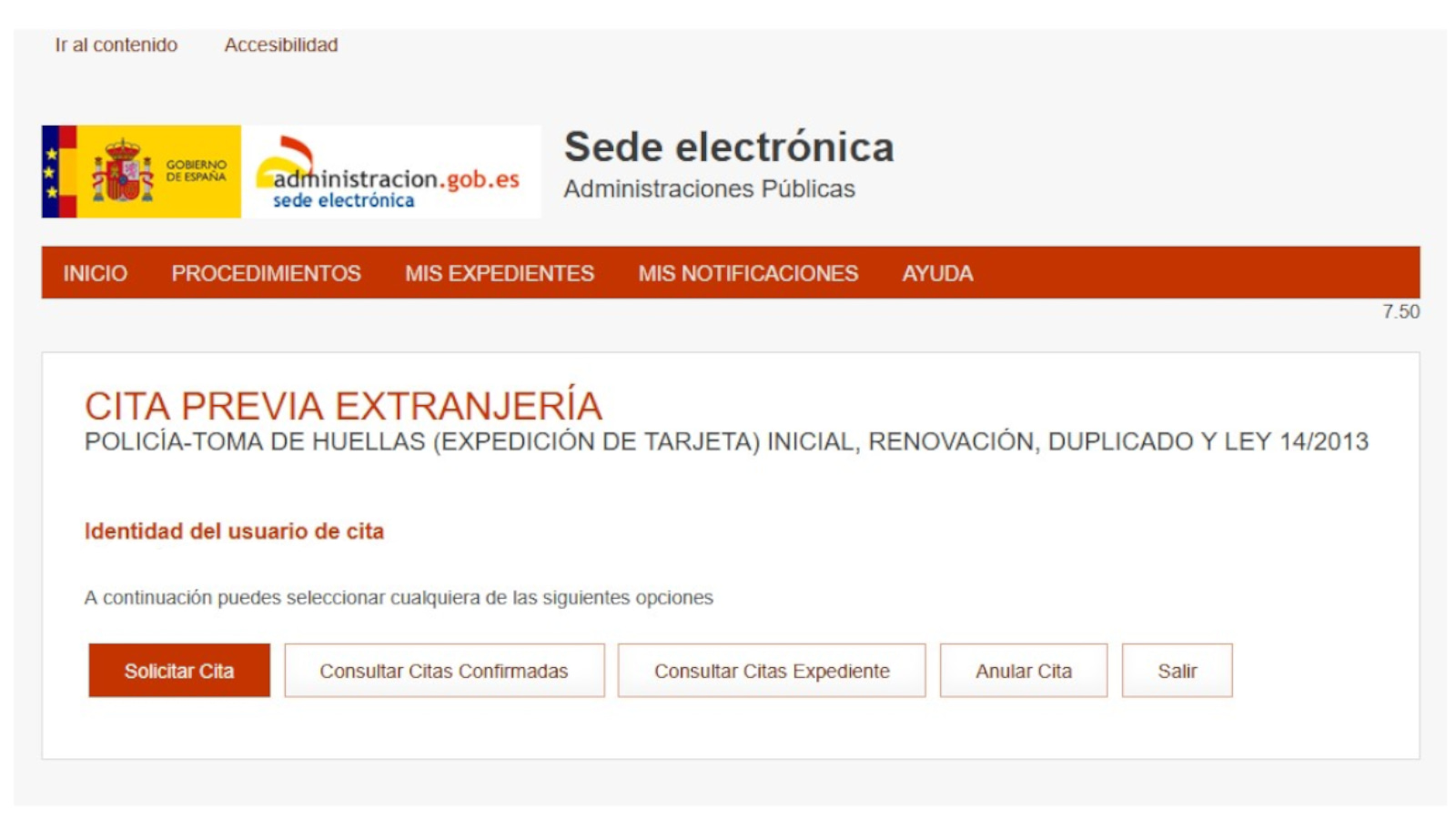
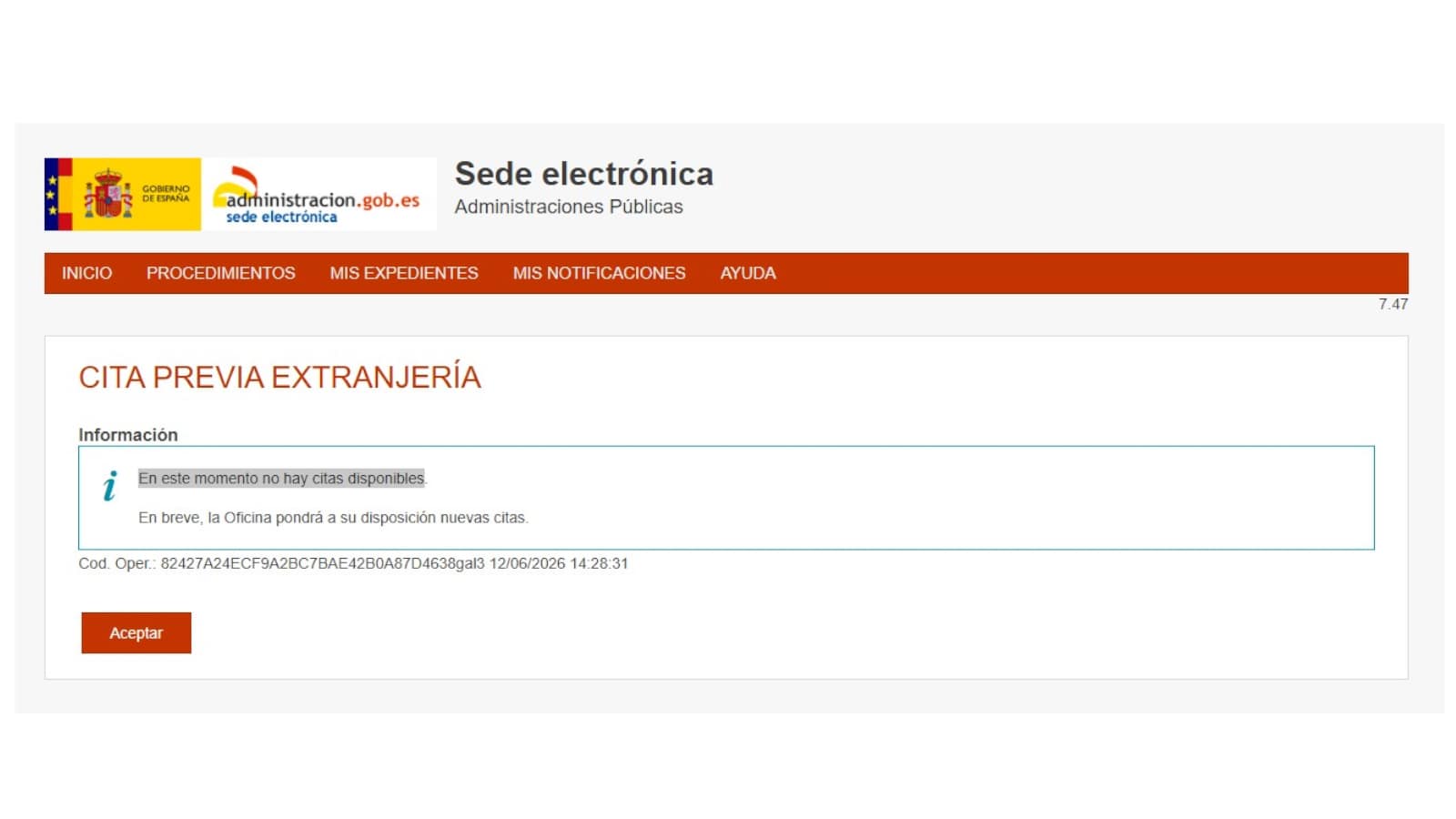
Here comes the infuriating part. Occasionally, we get to page 2, where you fill out your phone number and email. There’s a CAPTCHA to enter as well. We clicked submit. Then the dreaded “NO APPOINTMENTS…” message. This happened numerous times. Finally, I got the hang of it. Fortunately, I could pre-populate the contact fields, carefully type in the CAPTCHA, and click the enter button. At this point, I took a deep breadth and waited.
Success! But wait, there’s one more hurdle. The site sent a code to my wife’s phone to confirm the appointment. I needed that number, but she was out on an errand. In a panic, I sent a WhatsApp, hoping she would see the message in time and my plea to tell me what it was. As luck would have it, she was checking her phone at that moment and sent me the digits in time.
Finally, we both have appointments. Then it’s off to the photographer to get updated carnet (ID card) photos. Then we’ll create the “Go” package, which will have all the printed documents needed (we hope, I’m using the checklist supplied by the acceptance letter) and proof of payment for the second part of the procedure.
When all else fails, read the instructions
Thought I was clever snagging an early appointment. Turns out I didn’t read the small print that the appointment had to take place AFTER the expiration of the TIE (In Spanish: tarjeta de identidad de extranjero.) My wife’s cita previa was two days too early.
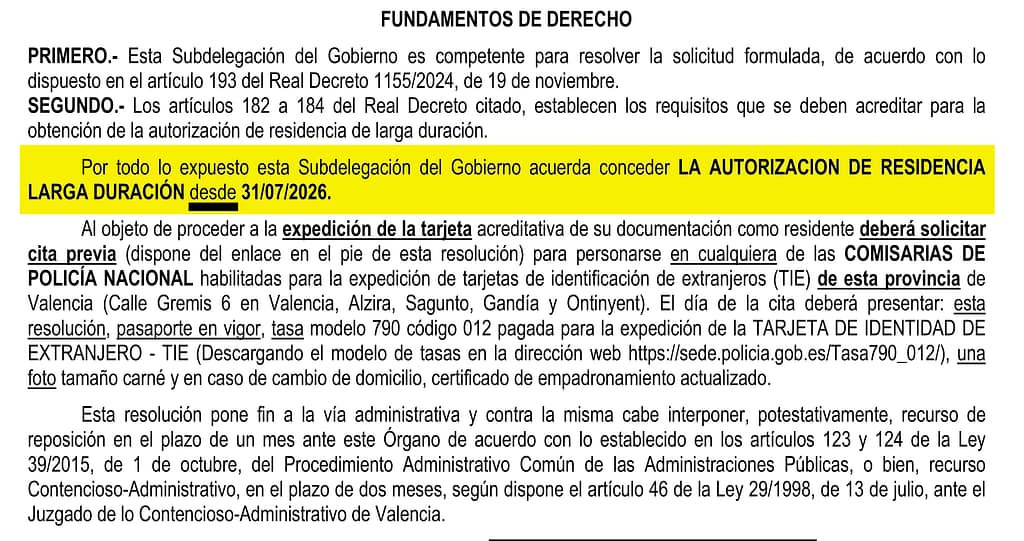
Por todo lo expuesto esta Subdelegación del Gobierno acuerda conceder LA AUTORIZACION DE RESIDENCIA LARGA DURACIÓN desde [EXPIRATION DATE]
For all the reasons stated above, this Sub-delegation of the Government agrees to grant the LONG-TERM RESIDENCE PERMIT from [EXPIRATION DATE]
That “desde” or “after” is critical information I overlooked. Nothing can be done before that date. Seeing this error, the clerk at the desk shook her head and sent my wife on her way immediately.
After that appointment fiasco, I couldn’t cancel the unused event. If you can’t get rid of that, there’s no way to ask for a new appointment. Fortunately, by the next day, it cleared the busted date and the operation started anew.
By not getting the renewal done on that date, it set into motion a cascade of failures. In the interim, my wife’s padrón (akin to the census) had expired and the copy we had was only good for 90 days. And that would expire before any new date could be set. This was the very same padrón I had renewed last year, but somehow it was only good for a year – not the normal two years.
So, an expired padrón would halt the visa renewal since it had to be valid within ninety days before the fingerprinting appointment. In order to re-establish the padrón, we had to submit the lease, the proof of the previous month’s payment, etc… I sent the paperwork online to the city, but never heard back. So we went to our local Padró office. There we were told that the documents would not work. Even if those were the type I used before. Different person, different rules.
So we needed a lease with at least six months remaining, proof of payment to the IBAN listed on the lease, and the Cadastral Reference, which is the property ID in the city’s register. Fortunately, we were renewing our lease and it was just a matter of asking the landlord to send us a new copy.
When we got to our next padrón meeting, we were told by the clerk we needed the original lease. After explaining that we signed it electronically due to the Covid pandemic, that reason seemed to satisfy the issue. After several anxious moments, my wife was added back to the emadronimiento and we were (hopefully) set to start her visa renewal again.
Is the finish line in sight?
Finally, the new date arrived. Unlike two years ago – the last time we renewed the visa – there were no lines. A number of police officers, with what appeared to be regular personnel sitting aside them, staffed the computers. I was unable to accompany my wife for this part of the saga. She was ultimately approved, probably despite my feeble efforts to get this done.
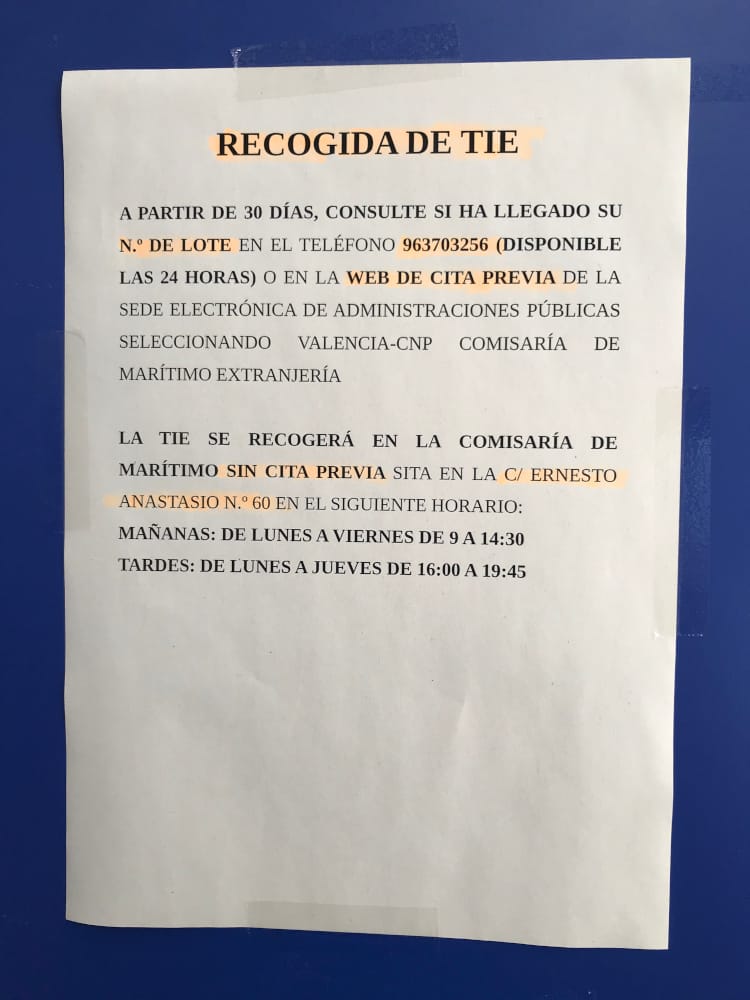
Upon successful completion of that task, there is a waiting period for the cards to be issued. The pick-up point is at another police station across town. On the document from the police station, there is a “Lote” number assigned, which means until that shows up, you cannot physically get the card. You can check the status on the official site. People need to pick up their card in person; there are no stand-ins (with limited exceptions) allowed. It’s you or no one.
I saw a paper posted outside the police station stating at least 30 days before the cards are available for retrieval. Last time, we could pick up the cards without an appointment, and that still seems to be the case in Valencia. Once we get those cards in hand, we won’t have to run this renewal gauntlet for another five years.
Lived experience is a really tough teacher. I learned again how to navigate a computerized, and at times contradictory, bureaucracy. Where to add the digital certificates and to understand the task. And the possibility of AI agents vetting the paperwork. I can only hope it is easier in the future. But my experience tells me it probably won’t.



Leave a Reply